Water Extraction in Leander, TX
Standing water on a slab floor has nowhere to drain, so it wicks into baseboards, drywall and cabinets. The extraction crew pulls it out first, then the drying starts.
(888) 926-4485Get Leander water extraction started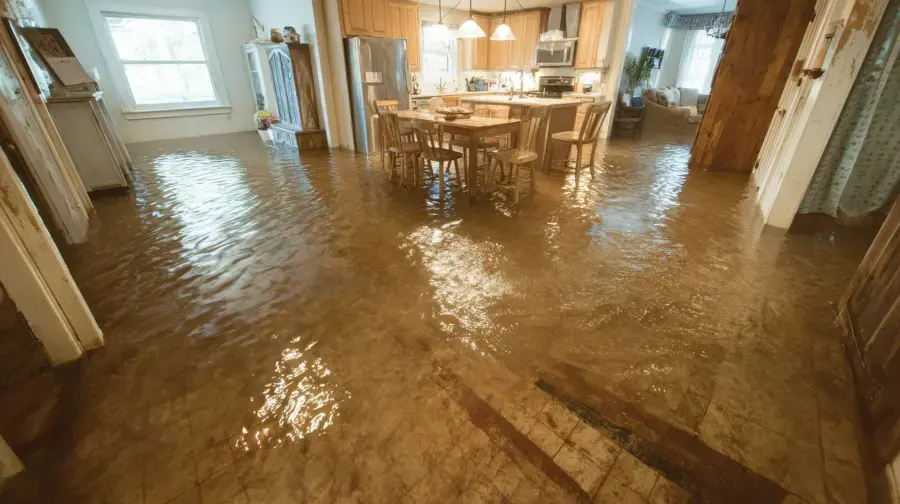
What to do the moment you find water extraction
Stop the source
Close the main shut-off, usually in the garage or at the curb box, or the valve behind the fixture.
Kill wet circuits
If the breaker panel is dry, switch off power to rooms with water on the floor.
Photograph first
Take wide and close photos before anything moves; they anchor the claim.
Lift what floats
Move rugs, boxes and furniture off the wet floor and put foil under furniture legs.
How water extraction is handled in Leander
Moisture mapped first
The tech who does the walkthrough maps the wet area with pinless meters and thermal imaging before any equipment goes down, so the plan matches what is actually wet.
Equipment sized to the room
The drying team sets air movers to each room's evaporation load and runs LGR dehumidifiers, and the gear stays until the readings say dry.
Claim-ready documentation
Daily moisture readings, psychrometric logs and timestamped photos go into the job file, the record an adjuster reads.
What does water extraction cost in Leander, TX?
In Leander, TX, emergency water extraction typically runs $300 to $1,500 on its own, and most jobs roll straight into drying, which brings a contained loss to roughly $1,500 to $4,500. Category, square footage and flooring type drive the number.
Single room, clean water
- Truck-mount extraction
- Moisture map
- Photo documentation
Several rooms or carpet and pad
- Pad extraction or removal
- Wall base checks
- Drying set planned
Extraction plus full dry-out
- Air movers and LGR units
- Daily readings
- Claim-ready logs
Ranges move with the water category, the square footage, the material class and how fast drying started. For a closer planning number, try the water damage cost calculator.
Almost every Leander home sits on a concrete slab, which means there is no crawlspace or basement for water to run into. It spreads sideways instead, under carpet pad, into the bottom plate of every wall it touches and up the drywall by wicking. Extraction is the step that decides how much of that material the drying team can save.
Why extraction comes before any fan
A gallon of water pulled out with a wand is a gallon that never has to be evaporated. Air movers and dehumidifiers remove water slowly, a few pints an hour per unit, while a truck-mounted extractor removes it by the gallon. The extraction crew works the wettest zones first and makes repeated slow passes on carpet so the pad gives up its water too.
- Truck-mounted units send the water out of the house instead of into a shop vac that fills every few minutes.
- Weighted extraction tools press water out of carpet and pad where the pad can be saved.
- Portable units reach upstairs rooms, closets and tight bathrooms.
What the crew checks while the water comes up
The tech who does the walkthrough maps moisture with pinless meters and thermal imaging while extraction is still running. That map shows how far the water traveled under flooring and into wall cavities, which is almost always farther than the visible wet line. It also sets the water category: a clean supply line leak is Category 1, a washer overflow is Category 2 and anything from outside or from a drain is Category 3, handled with the sewage backup cleanup protocol.
After extraction: drying to a number
Once the standing water is gone, the drying team sets air movers to the room's evaporation load and runs LGR dehumidifiers. Readings get logged every day, and the equipment leaves when the wet materials sit within a few points of a dry reference in the same house. That is the structural drying phase, and it usually takes three to five days on a contained loss. The EPA moisture guidance and Ready.gov flood safety both stress the same point: dry the building quickly, within a day or two, before mold gets a foothold.
Water still on the floor? The extraction crew starts pulling water the moment it is safe to work. Call (888) 926-4485
Covering Leander and the ZIPs around it
The Leander restoration crew covers the city and the paying ZIP areas around it, day and night.
Coverage runs across Leander (78641 and 78646), the Jonestown, Lago Vista and Point Venture side (78645), and on into Cedar Park and Liberty Hill.
Neighborhoods include Crystal Falls, Travisso, Palmera Ridge, Bryson, Benbrook Ranch, Mason Hills and Old Town Leander.
See every neighborhood and ZIPRelated water damage services in Leander
Water Extraction questions, answered
How much water can a truck-mounted extractor remove?
A truck-mounted unit removes water far faster than any household wet vac and sends it straight out of the house, so a flooded room can often be cleared of standing water in one visit. The exact rate depends on the flooring and how deep the water sits.
Can the carpet pad be saved after extraction?
Sometimes. Pad soaked by clean Category 1 water can often be extracted and dried in place if drying starts quickly. Pad touched by Category 2 or 3 water is usually removed, because it holds contamination the crew cannot clean out.
Why does water spread so far on a slab floor?
A slab has no drain path, so water runs sideways under flooring and into the bottom of every wall it reaches. Drywall then wicks it upward. That is why the moisture map often shows wet areas well beyond the puddle you can see.
Should I run fans before the crew gets there?
Turn off the water source and cut power to wet outlets if the panel is dry, but hold off on fans over standing water. Moving air over a flooded floor does little until the water is extracted, and it can spread odors.
Is water extraction usually covered by insurance?
Sudden and accidental water, like a burst supply line, is often covered on a Texas homeowners policy after the deductible. Rising water from outside is a flood claim, which is a separate policy. It is worth checking with your own insurer.
How long does drying take after extraction?
A contained Class 1 or 2 loss usually dries in three to five days with air movers and LGR dehumidifiers. Hardwood, cabinets and dense materials take longer, and the equipment stays until the readings say dry.
Water on the floor in Leander? Start the dry-out now.
Every hour of standing water pushes it further into drywall, baseboards and the slab. The Leander restoration crew extracts first, then dries to the IICRC S500 standard.
Leander, TX and southwest Williamson County