Flash Flood Cleanup in Leander, TX
Hill Country cloudbursts drop inches of rain on thin soil over limestone, and it runs straight at low doors and garages. The mitigation team handles floodwater as contaminated from the start.
(888) 926-4485Get Leander water extraction started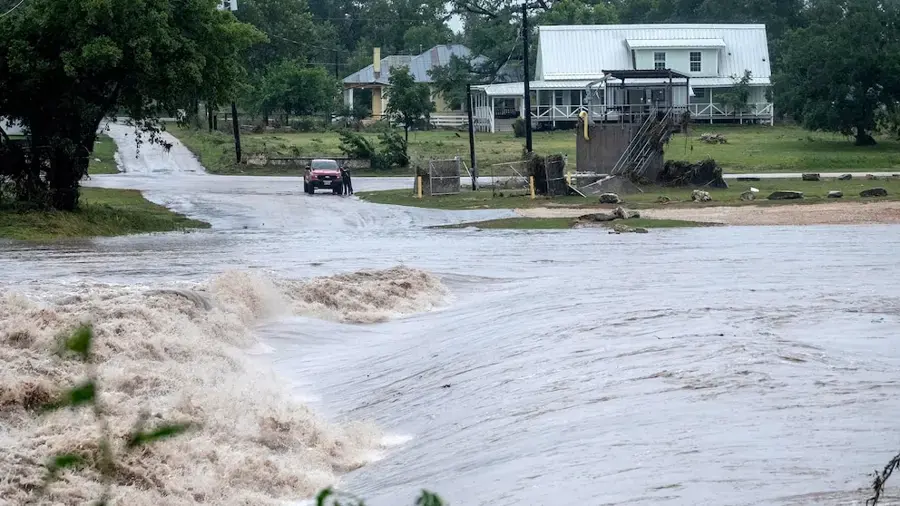
What to do the moment you find flash flood cleanup
Stay out of the water
Floodwater can hide live current and contamination; keep kids and pets away.
Power off if safe
Shut the breakers for flooded rooms only if the panel is dry and you are not standing in water.
Record the high-water line
Photograph the water mark on walls and every damaged item before cleanup.
Set aside what you need
Move medicine, documents and valuables to a dry upper shelf or another room.
How flash flood cleanup is handled in Leander
Moisture mapped first
The tech who does the walkthrough maps the wet area with pinless meters and thermal imaging before any equipment goes down, so the plan matches what is actually wet.
Equipment sized to the room
The drying team sets air movers to each room's evaporation load and runs LGR dehumidifiers, and the gear stays until the readings say dry.
Claim-ready documentation
Daily moisture readings, psychrometric logs and timestamped photos go into the job file, the record an adjuster reads.
What does flash flood cleanup cost in Leander, TX?
In Leander, TX, flash flood cleanup typically runs $3,000 to $15,000 or more, because Category 3 floodwater requires protective gear, removal of soaked materials, antimicrobial treatment and full structural drying. Square footage and how high the water rose drive the range.
Garage or one room
- Extraction and mud-out
- Flood cut and removal
- Antimicrobial and drying
Several rooms
- Containment
- Carpet, pad and drywall out
- Air scrubbers
Whole ground floor
- Extensive removal
- Full structural drying
- Flood claim documentation
Ranges move with the water category, the square footage, the material class and how fast drying started. For a closer planning number, try the water damage cost calculator.
Central Texas earns its Flash Flood Alley name. Storms stall over the Hill Country, the thin rocky soil around Leander soaks up very little, and the water heads for the South San Gabriel River, Brushy Creek, Mason Creek and the unnamed draws in between. The July 2025 Hill Country flooding showed how fast that water rises. When it reaches a house, it comes in under garage doors, through weep holes and across patio thresholds.
Floodwater is Category 3 the moment it enters
Water that crossed a yard, a street or a creek bed carries soil, fertilizer, sewage from overwhelmed lines and whatever else it picked up. The mitigation team treats it as Category 3, which changes the whole job:
- Crews work in gloves, boots and respirators, and set containment where the loss borders clean rooms.
- Carpet, pad and the lower drywall that the water touched come out, because porous materials touched by Category 3 water get removed, not dried.
- Hard surfaces get cleaned and treated with an EPA-registered antimicrobial at its label dwell time before drying begins.
Mud-out, flood cut and dry
After extraction, the crew mucks out silt, then makes a flood cut: a straight line through the drywall a foot or more above the high-water mark, so wet insulation and the bottom plate can be reached and dried. Air movers and LGR dehumidifiers go in once the cavities are open, and the drying team logs readings every day until the framing and slab reach the drying goal. HEPA air scrubbers run where dust and odor build up during demolition.
Flood coverage is its own policy
Standard homeowners policies usually exclude rising surface water, which falls under flood insurance through the National Flood Insurance Program or a private flood policy. Wind-driven rain through a damaged roof is often handled differently. The crew documents the high-water line, the category and every removed material so either kind of claim has what it needs. For safety during an event, the National Weather Service flood safety page is the reference: never drive or walk into moving water.
Floodwater inside? Stay out of it and keep the power off in wet rooms, then call (888) 926-4485
Covering Leander and the ZIPs around it
The Leander restoration crew covers the city and the paying ZIP areas around it, day and night.
Coverage runs across Leander (78641 and 78646), the Jonestown, Lago Vista and Point Venture side (78645), and on into Cedar Park and Liberty Hill.
Neighborhoods include Crystal Falls, Travisso, Palmera Ridge, Bryson, Benbrook Ranch, Mason Hills and Old Town Leander.
See every neighborhood and ZIPRelated water damage services in Leander
Flash Flood Cleanup questions, answered
Is floodwater always treated as contaminated?
Yes. Water that flowed across the ground or out of a creek is Category 3 under the IICRC S500 standard, so porous materials it soaked are removed and hard surfaces are cleaned and treated before drying.
How high does the drywall cut go after a flood?
Crews usually cut 12 to 24 inches above the highest water line, or higher if the moisture map shows wicking above that. The goal is to remove everything the floodwater touched and open the wall cavity to dry.
Will my homeowners policy pay for flash flood damage?
Most standard policies exclude rising surface water. That loss is usually a flood insurance claim. Rain that entered through storm damage to the roof or windows can be treated differently. It is worth checking with your own insurer.
Can furniture that sat in floodwater be saved?
Solid wood and metal pieces often clean up. Upholstered furniture, mattresses and particleboard that soaked up Category 3 water usually cannot be made safe and are discarded, with photos taken first for the claim.
Which parts of Leander flood most often?
Low spots near the South San Gabriel River, Brushy Creek and Mason Creek, and homes at the bottom of steep streets on the west side, see the most runoff. Any home with a low garage slab or patio door can take water in a cloudburst.
How long does a flood dry-out take?
Once the wet materials are removed, framing and slab usually dry in three to seven days with air movers and dehumidifiers. The equipment stays until readings reach the drying goal, and rebuild starts after that.
Water on the floor in Leander? Start the dry-out now.
Every hour of standing water pushes it further into drywall, baseboards and the slab. The Leander restoration crew extracts first, then dries to the IICRC S500 standard.
Leander, TX and southwest Williamson County