Ceiling Leak Water Damage in Leander, TX
Water in a ceiling carries weight and runs toward light fixtures. The restoration team checks the ceiling for sag, finds the source above and dries the drywall, joists and insulation.
(888) 926-4485Get Leander water extraction started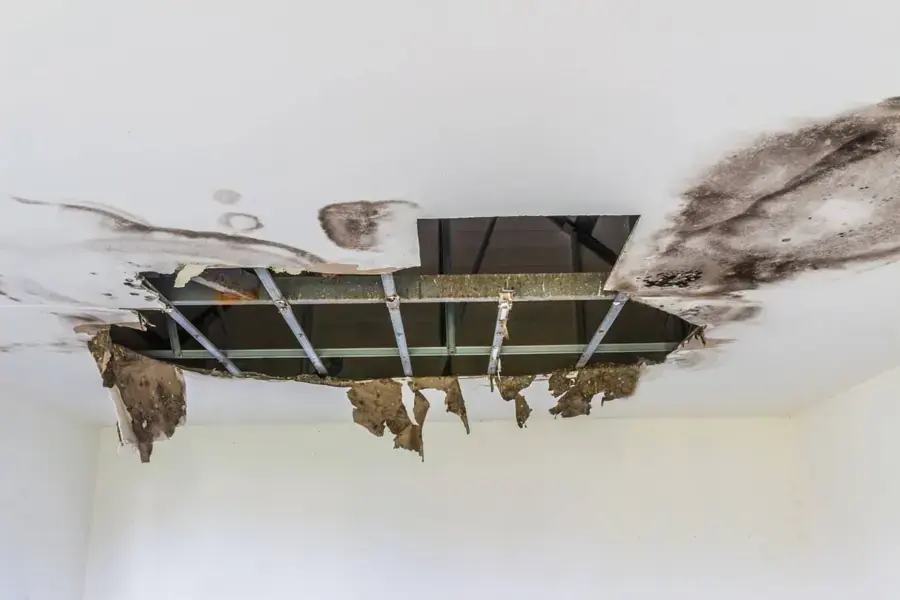
What to do the moment you find ceiling leak water damage
Stop the water above
Close the valve at the upstairs fixture or the main if you cannot find it.
Clear the room below
Move furniture and electronics out from under the wet area.
Power off fixtures
Switch off the circuit feeding any wet light or fan.
Photograph both floors
Record the source above and the ceiling below.
How ceiling leak water damage is handled in Leander
Moisture mapped first
The tech who does the walkthrough maps the wet area with pinless meters and thermal imaging before any equipment goes down, so the plan matches what is actually wet.
Equipment sized to the room
The drying team sets air movers to each room's evaporation load and runs LGR dehumidifiers, and the gear stays until the readings say dry.
Claim-ready documentation
Daily moisture readings, psychrometric logs and timestamped photos go into the job file, the record an adjuster reads.
What does ceiling leak water damage cost in Leander, TX?
In Leander, TX, ceiling leak water damage typically runs $700 to $4,000. Whether the drywall can be dried in place, how much insulation got wet and the water category behind the leak drive the cost.
Stain, drywall intact
- Moisture mapping
- In-place drying
- Readings logged
Partial ceiling removal
- Sagging drywall out
- Insulation removal
- Joist drying
Large area or Category 2 or 3
- Wider removal
- Antimicrobial where needed
- Claim documentation
Ranges move with the water category, the square footage, the material class and how fast drying started. For a closer planning number, try the water damage cost calculator.
Two-story homes fill the newer Leander neighborhoods, from Crystal Falls to Palmera Ridge, and that puts bathrooms, laundry rooms and water heaters above finished ceilings. A failed wax ring, a cracked shower pan, a loose supply connector or an overflowing tub can soak the ceiling below without much warning. In single-story homes, the source is usually the attic.
Safety before drying
A drywall ceiling holding water gets heavy fast, and the water often finds light fixtures and ceiling fans on the way down. The tech who does the walkthrough checks for sag and bulging first and keeps people out from under it. Power to affected fixtures stays off until the area is dry.
- A bulge or sag in the drywall means pooled water above.
- Water dripping from a fixture means the wiring box is wet.
- Cracks that follow the tape seams show the panels are loaded.
Finding the source above
The source dictates the category and the plan. A supply connector under an upstairs vanity is clean Category 1 water. A toilet overflow is Category 2 or 3, which changes what comes out. The mitigation team uses thermal imaging and pinless meters on the ceiling and the floor above to trace the path, and a plumber repairs the fixture or line. Attic sources get their own pages: AC condensate leaks and hail roof leaks.
Drying a ceiling in place
Ceilings that held their shape can often be dried in place. The drying team may drill small holes to release trapped water, then aims air movers at the ceiling plane and runs an LGR dehumidifier in the room. Sagging sections come down, and wet insulation above gets removed. Readings are logged daily until the drywall and joists reach the goal. The EPA moisture guidance covers why ceilings need to dry quickly, and the EPA WaterSense leak page explains how to spot the small fixture leaks behind many ceiling stains.
Ceiling bulging or dripping? Keep everyone out from under it, switch off that circuit and call (888) 926-4485
Covering Leander and the ZIPs around it
The Leander restoration crew covers the city and the paying ZIP areas around it, day and night.
Coverage runs across Leander (78641 and 78646), the Jonestown, Lago Vista and Point Venture side (78645), and on into Cedar Park and Liberty Hill.
Neighborhoods include Crystal Falls, Travisso, Palmera Ridge, Bryson, Benbrook Ranch, Mason Hills and Old Town Leander.
See every neighborhood and ZIPRelated water damage services in Leander
Ceiling Leak Water Damage questions, answered
Is a sagging ceiling dangerous?
It can be. Wet drywall holding pooled water can give way, and water near fixtures means wet wiring. Keep people out from under it and switch off power to that circuit until the restoration team checks it.
Should I poke a hole to drain the ceiling?
Only if a bulge is actively growing and you can do it safely with a bucket under it and the power off. Otherwise leave it for the crew, who can release the water in a controlled way.
Can a water-stained ceiling be dried without replacing it?
Often, if it did not sag and the readings come down to the goal. It then needs stain-blocking primer and paint. Drywall that sagged, crumbled or got wet from Category 3 water comes down.
What usually causes ceiling leaks in two-story homes?
Upstairs toilet wax rings, shower pans and valves, tub overflows, vanity supply connectors and washing machines on the second floor. In single-story homes the source is usually the attic: AC condensate or a roof leak.
Is ceiling leak damage covered by insurance?
Sudden leaks from a plumbing failure are often covered. Slow leaks over time and the fixture repair itself may not be. It is worth checking with your own insurer and photographing the source.
How long does a ceiling take to dry?
A ceiling that stays in place usually dries in two to four days with air movers and a dehumidifier. If joists and insulation got soaked, it takes longer, and readings decide when the equipment leaves.
Water on the floor in Leander? Start the dry-out now.
Every hour of standing water pushes it further into drywall, baseboards and the slab. The Leander restoration crew extracts first, then dries to the IICRC S500 standard.
Leander, TX and southwest Williamson County