Slab Leak Water Damage in Leander, TX
A leak under the foundation shows up as warm tile, a damp baseboard or a water bill that jumps. The drying team maps it, opens only what it must and dries the slab.
(888) 926-4485Get Leander water extraction started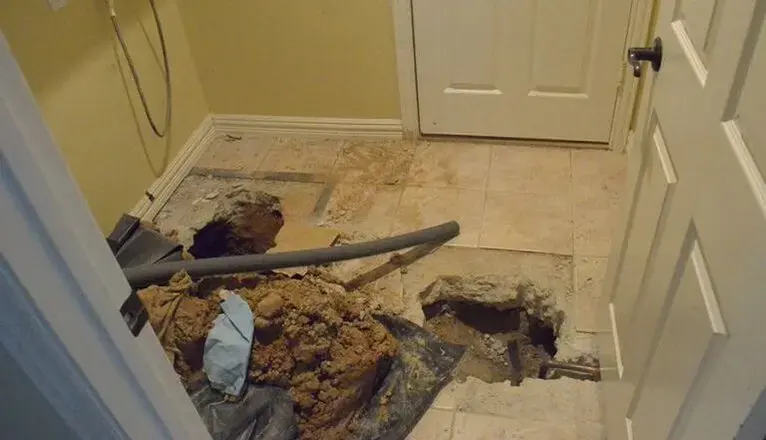
What to do the moment you find slab leak water damage
Check the meter
With every fixture off, watch the water meter; a moving dial means a leak.
Close the main
Shut the main valve to stop water feeding the leak.
Mark the wet spots
Note warm or damp spots and swelling trim, and photograph them.
Clear the floor
Move rugs and furniture off the damp area so the floor can be opened.
How slab leak water damage is handled in Leander
Moisture mapped first
The tech who does the walkthrough maps the wet area with pinless meters and thermal imaging before any equipment goes down, so the plan matches what is actually wet.
Equipment sized to the room
The drying team sets air movers to each room's evaporation load and runs LGR dehumidifiers, and the gear stays until the readings say dry.
Claim-ready documentation
Daily moisture readings, psychrometric logs and timestamped photos go into the job file, the record an adjuster reads.
What does slab leak water damage cost in Leander, TX?
In Leander, TX, slab leak water damage restoration typically runs $1,500 to $7,500, not counting the plumber's repair of the line. Flooring type, how long the leak ran and how much slab and wall area got wet drive the cost.
Small wet zone, tile stays
- Moisture mapping
- Baseboard removal
- Slab and wall drying
Room with floating floor
- Laminate or plank removal
- Drywall base drying
- Daily readings
Long-running leak, several rooms
- Extensive flooring removal
- Extended slab drying
- Claim documentation
Ranges move with the water category, the square footage, the material class and how fast drying started. For a closer planning number, try the water damage cost calculator.
Leander's housing stock is slab-on-grade almost everywhere, with supply and drain lines running under the concrete. Clay soils across Williamson County shrink during drought and swell after heavy rain, and that movement stresses those lines. A pinhole or a failed joint under the slab can run for weeks before anyone notices, soaking the concrete from below and pushing water into flooring and wall bottoms.
The signs that point to a slab leak
- A warm spot on tile or a floor that feels damp with no spill nearby.
- Baseboards swelling, or wood and laminate flooring starting to cup along one wall.
- The sound of running water with every fixture off, or a water meter that keeps turning.
- A monthly bill well above the usual summer or winter pattern.
A plumber locates and repairs the line itself. The restoration team handles what the water did to the house: finding how far the moisture spread and drying it out.
How the wet zone gets mapped and opened
The tech who does the walkthrough maps the floor and wall bottoms with pinless meters and thermal imaging, then confirms with pin readings. That map decides what comes up. Floating laminate and vinyl plank over a wet slab usually need to come up so the concrete can breathe, while tile over a slab can sometimes stay if the readings allow. Baseboards come off and small holes may be drilled at the wall base so dry air reaches the cavity.
Drying a slab takes patience
Concrete holds water deep in its mass and gives it up slowly. The drying team runs LGR dehumidifiers and air movers across the exposed slab and may add heat or specialty mats on stubborn areas. Readings get logged daily until the slab and walls reach the goal, which often takes longer than a surface leak. The EPA WaterSense leak page covers how to read your meter for a hidden leak, and Texas A&M AgriLife Extension explains the shrink-swell soils behind many foundation line failures.
Warm floor or a meter that keeps spinning? Shut off the main and call (888) 926-4485
Covering Leander and the ZIPs around it
The Leander restoration crew covers the city and the paying ZIP areas around it, day and night.
Coverage runs across Leander (78641 and 78646), the Jonestown, Lago Vista and Point Venture side (78645), and on into Cedar Park and Liberty Hill.
Neighborhoods include Crystal Falls, Travisso, Palmera Ridge, Bryson, Benbrook Ranch, Mason Hills and Old Town Leander.
See every neighborhood and ZIPRelated water damage services in Leander
Slab Leak Water Damage questions, answered
Who fixes the pipe under the slab?
A plumber finds and repairs the under-slab line, by tunneling, rerouting or opening the floor. The water damage restoration team handles the moisture it left in the slab, flooring and walls, and the two usually coordinate on the same loss.
Does the flooring always have to come up for a slab leak?
Not always. Floating floors like laminate and vinyl plank usually come up so the slab can dry. Tile and some glued floors can stay when the readings show the slab can dry through the edges and grout lines.
How long does a slab take to dry?
Longer than drywall. A slab that sat wet for weeks can take one to two weeks of dehumidification to reach the drying goal. The equipment stays until the readings say dry, not until a set date.
Why do slab leaks happen so often in Leander?
Most homes here sit on slab with plumbing under the concrete, and the clay soil around much of Williamson County moves between drought and heavy rain. That movement, plus water pressure and aging joints, leads to under-slab leaks.
Is a slab leak covered by insurance?
Many Texas policies cover the water damage from a sudden leak and sometimes the cost to access the pipe, but not the pipe repair itself or damage from a slow long-term leak. It is worth checking with your own insurer.
Can mold start from a slab leak?
Yes. A hidden leak keeps flooring, pad and wall bottoms wet for weeks, which is well past the 24 to 48 hour window where mold can start. That is why the wet zone gets mapped and dried fully, not just the visible spot.
Water on the floor in Leander? Start the dry-out now.
Every hour of standing water pushes it further into drywall, baseboards and the slab. The Leander restoration crew extracts first, then dries to the IICRC S500 standard.
Leander, TX and southwest Williamson County